Word
brave
US/ˈbɹeɪv/
UK/bɹˈeɪv/
Definitions
01courageous
B1 · Intermediate
adj. showing courage when you are in a situation that is dangerous, difficult, or painful.
adj. possessing or displaying courage; able to face danger, pain, or misfortune without showing fear.
日本語:勇敢な※
“It was very brave of her to speak up against the unfair rules.”
“The young firefighter was praised for his brave actions during the rescue operation, despite the structural instability of the burning building.”
Synonyms
02unwise or risky
C1 · Advanced British English · Humorous
adj. a polite or funny way to say that someone is being a bit foolish or taking a big risk.
adj. used euphemistically or ironically to describe a decision that is perceived as reckless or likely to fail.
“That is a brave choice of outfit for such a formal wedding.”
“The minister described the proposed policy as a brave move, which everyone in the room understood as a polite way of calling it political suicide.”
03to face something difficult
B2 · Upper Intermediate
v. to deal with something difficult or unpleasant in a direct and courageous way.
v. to endure or face unpleasant conditions or a difficult challenge with fortitude.
“We decided to brave the snow and walk to the grocery store.”
“The small fishing vessel had to brave the Atlantic gales for three days before reaching the safety of the harbour.”
Usage
This is a transitive verb that always takes a direct object.
04a warrior
C2 · Proficiency Countable noun Archaic
n. an old word for a Native American warrior.
n. a term formerly used to refer to a North American Indian warrior.
“The old stories told of a young brave who saved his village.”
“Nineteenth-century frontier novels often depicted the Sioux braves as formidable and highly skilled tactical opponents.”
Teaching tip
This term is considered dated and can be seen as offensive or stereotypical in modern contexts; use 'warrior' or specific tribal names instead.
Collocations
Common phrases and expressions where native English speakers use the word “brave” in context.
Verb
01. be brave
“You need to be brave when you go to the dentist for your surgery.”
verb + adj
02. try to be brave
“The little boy tried to be brave while the nurse gave him the injection.”
verb + infinitive
Adjective
03. brave enough to
“Are you brave enough to tell the truth even if it gets you into trouble?”
adj + infinitive
04. brave face
“Even though she was sad about the news, she put on a brave face for her children.”
adj + noun
05. incredibly brave
“It was incredibly brave of her to jump into the water to save the dog.”
adv + adj
Noun
06. brave decision
“Quitting his stable job to start a new business was a very brave decision.”
adj + noun
Real-World Examples
“The ship's crew braved the terrible storm.” “The municipality commended the brave men and women of its emergency services for their swift and disciplined response.” “Brave firefighters' swift actions during a tenement fire in Perth this past weekend saved numerous lives, as discussed in a recent council meeting.” Etymology
From Middle French brave, borrowed from Italian bravo, itself of uncertain origin (see there). Doublet of bravo.
From Middle French braver, from brave.
Etymology adapted from Wiktionary, available under CC BY-SA 4.0.
Word family
ADJECTIVE
ADVERB
Related words
Idioms
01. brave out
The word in film
Brave · 2012 · Comedy
- Directed by:
- Mark Andrews
Director Mark Andrews tells the story of a Scottish princess who must show great courage to save her family from a magical curse. The title describes her character as she faces dangerous challenges and fights for her own future.
In Literature
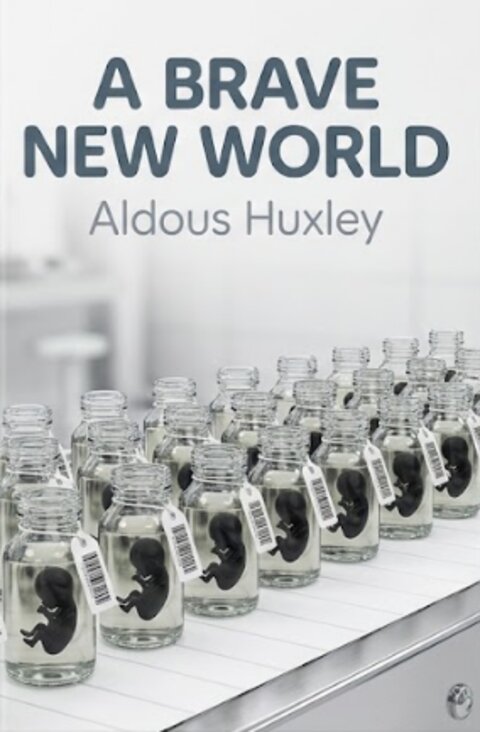
Original artwork created for englishreference.com.
Brave New World · 1932-01-01 · Dystopian fiction, parody
- Author:
- Aldous Huxley
Aldous Huxley’s 1932 dystopian classic presents a futuristic society where citizens are genetically engineered and conditioned to be happy. The title ironically uses the word to describe a world that appears perfect and courageous on the surface but lacks true human emotion. When an outsider named John enters this 'civilized' environment, his struggle highlights the tension between forced stability and the difficult, brave reality of being human.
- Exam level
- CambridgeCambridgeCambridge English QualificationsThe exam suite from Cambridge University Press & Assessment, from A1 Movers up to C2 Proficiency. The benchmark names double as CEFR labels.B1 PreliminaryIELTSIELTSInternational English Language Testing SystemThe 0–9 band test co-owned by the British Council, IDP, and Cambridge. Used for university entry, work, and migration.4.0–5.0TOEFL iBTTOEFL iBTTest of English as a Foreign Language, Internet-Based TestETS's academic English test, the standard route for US university admissions. Scored 0–120, with a 1–6 scale since 2026.1–6 scale: 3.0–3.544–71TOEICTOEICTest of English for International CommunicationETS's workplace English test, big in Japan and Korea. Listening & Reading scores 10–990 and tops out at C1.550–784
- Frequency
- Common
- Level
- B1 · IntermediateOxford
- Updated
- アルファベット
- 読み方の一覧 →
QR code
englishreference.com/q/brave
※ 機械で選んだ訳語です。ネイティブスピーカーによる確認はまだです。
「日本語」 data: JMdict (EDRDG), CC BY-SA 4.0