Word
english
Phoneticseng·lish, stress on the first syllable
US/ˈɪŋɡɫɪʃ/
UK/ˈɪŋɡlɪʃ/
Uncountable noun
Definition
n. the language that people speak in countries like the UK, the US, and Australia. It is also used as a common language for business and travel around the world.
n. a West Germanic language that originated in early medieval England and is now the global lingua franca. When referring to the language or the people of England, it is always capitalised.
Examples
“She is learning English to help her get a better job.”
“Most international flights use English as the primary language for communication between pilots and air traffic control.”
“While modern English has evolved significantly from its Anglo-Saxon roots, it retains a core Germanic structure despite the heavy influence of French and Latin vocabulary following the Norman Conquest.”
Examples
simple
“She is learning English to help her get a better job.”
contextual
“Most international flights use English as the primary language for communication between pilots and air traffic control.”
complex
“While modern English has evolved significantly from its Anglo-Saxon roots, it retains a core Germanic structure despite the heavy influence of French and Latin vocabulary following the Norman Conquest.”
Usage
Always capitalised. When referring to the people of England collectively, it is used with the definite article ('the English') and takes a plural verb.
Etymology
From Middle English Englisch, English, Inglis, from Old English Englisċ (“of the Angles; English”), from Engle (“the Angles”), a Germanic tribe + -isċ; equivalent to Engle + -ish. Compare West Frisian Ingelsk, Scots Inglis (older ynglis), Dutch Engels, Danish engelsk, Old French Englesche (whence French anglais), German englisch, Spanish inglés, all ultimately derived from Proto-Indo-European *h₂enǵʰ- (“narrow”) (compare Sanskrit अंहु (áṃhu, “narrow”), अंहस् (áṃhas, “anxiety, sin”), Latin angustus (“narrow”), Old Church Slavonic ѫзъкъ (ǫzŭkŭ, “narrow”)). More at Angles (tribe) § Etymology on Wikipedia.Wikipedia
Etymology adapted from Wiktionary, available under CC BY-SA 4.0.
Word family
NOUN
Idioms
01. body English
The word in film
English · 1996 · War
- Directed by:
- Anthony Minghella
- Starring:
- Ralph Fiennes, Jürgen Prochnow, Juliette Binoche
Anthony Minghella's 1996 epic war film follows a mysterious English burn victim and a nurse as they form an unexpected bond during World War II. The patient's nationality and the film's exploration of English identity are central to the narrative.
In Literature
English · 2007-01-01 · Fiction
- Author:
- Jeremy Paxman
Jeremy Paxman's 2007 non-fiction exploration examines the character and identity of English people, tracing historical and cultural traditions that define Englishness. The book investigates what it means to be English, from customs to attitudes, across centuries.
In Music
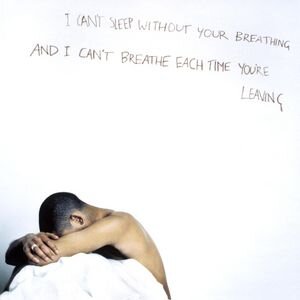
Cover shown under fair use for identification and commentary.
English Summer Rain · 2003 · Alternative rock
- Artist:
- Placebo
- Album:
- Sleeping with Ghosts
Placebo's 2003 alternative rock song captures the melancholy beauty of rain in England. The track appears on the album Sleeping with Ghosts and uses English to evoke a specific geographic and emotional landscape.
Domains
- Exam level
- CambridgeCambridgeCambridge English QualificationsThe exam suite from Cambridge University Press & Assessment, from A1 Movers up to C2 Proficiency. The benchmark names double as CEFR labels.A1 MoversIELTSIELTSInternational English Language Testing SystemThe 0–9 band test co-owned by the British Council, IDP, and Cambridge. Used for university entry, work, and migration.2.0–3.0TOEFL iBTTOEFL iBTTest of English as a Foreign Language, Internet-Based TestETS's academic English test, the standard route for US university admissions. Scored 0–120, with a 1–6 scale since 2026.1–6 scale: 1.0–1.50–23TOEICTOEICTest of English for International CommunicationETS's workplace English test, big in Japan and Korea. Listening & Reading scores 10–990 and tops out at C1.120–224
- Frequency
- Very common
- Level
- A1 · Beginner
- Updated
- アルファベット
- 読み方の一覧 →
QR code
englishreference.com/q/english