Word
hamlet
Phoneticsham·let, stress on the first syllable
US/ˈhæmɫət/
UK/hˈæmlət/
Definitions
01small settlement
B2 · Upper Intermediate Countable noun
n. a very small village or a group of houses in the countryside.
n. a small rural settlement, traditionally defined in British English as a village without its own church.
“They lived in a tiny hamlet with only ten houses and no shops.”
“The hikers passed through several remote hamlets, each consisting of little more than a few stone cottages and a communal well.”
Synonyms
Antonyms
02Shakespeare play
B2 · Upper Intermediate Uncountable noun Theater
n. a famous play by William Shakespeare about a prince of Denmark.
n. a tragedy by William Shakespeare, widely considered one of the most influential works in English literature.
“We are studying Hamlet in our English literature class this semester.”
“The actor's portrayal of Hamlet was praised for its psychological depth and modern interpretation of the prince's indecision.”
03Shakespeare character
C1 · Advanced Uncountable noun Theater Literary
n. the main character in Shakespeare's play who wants to avenge his father.
n. the eponymous protagonist of Shakespeare's tragedy, the Prince of Denmark.
“Hamlet is famous for his long speeches where he talks to himself.”
“Scholars have long debated whether Hamlet's madness was genuine or a calculated performance to deceive his uncle.”
04administrative area
C2 · Proficiency Countable noun Technical
n. a small community that does not have its own local government.
n. an unincorporated community or administrative division, specifically used in certain Canadian and American jurisdictions.
“The hamlet is too small to have its own mayor or police force.”
“Under provincial law, the hamlet remained an unincorporated territory managed by the larger municipal district.”
Synonyms
Real-World Examples
“The word “hamlet” also means a small village in English — a fitting description for this rural spot — but etymologically unrelated to the play’s title.” “But authorities have lifted all evacuation orders in the border region since Wednesday, allowing the residents of several Belgian hamlets and a town on the German border to return home.” “This short documentary is an oddly endearing portrait of Torrington, a hamlet in Alberta, Canada, and the institution at its heart: the World Famous Gopher Hole Museum.” “English adopted “hamlet” in the 1300s from Old French, where hamelet was a diminutive of hamel (village), according to the Chambers Dictionary of Etymology.” Etymology
From Latin Amlethus, as written by 13th-century Danish historian Saxo Grammaticus, and borrowed into English by way of François de Belleforest's French Hamlet, originally rendered as Hamblet in English. Ultimately from Old Danish Amlethæ, corresponding to Old Norse Amlóði (“fool”), claimed to be suggestive of the way that Hamlet acts in the play, from ama (“to annoy”).
Etymology adapted from Wiktionary, available under CC BY-SA 4.0.
In Literature
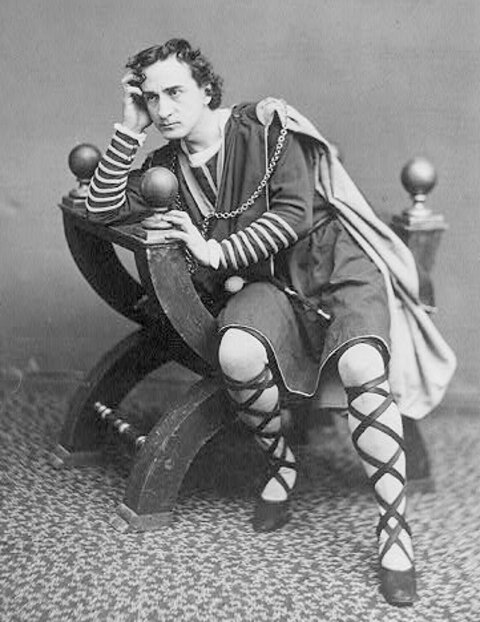
Cover: Public domain, via Wikimedia Commons — J. Gurney & Son, N.Y.
Hamlet · 1602-01-01 · Tragedy
- Author:
- William Shakespeare
William Shakespeare’s famous tragedy follows a Danish prince seeking revenge against his uncle for the murder of his father. While the title refers to the protagonist's name rather than a small settlement, the play remains one of the most significant works in English literature.
- Exam level
- CambridgeCambridgeCambridge English QualificationsThe exam suite from Cambridge University Press & Assessment, from A1 Movers up to C2 Proficiency. The benchmark names double as CEFR labels.C1 AdvancedIELTSIELTSInternational English Language Testing SystemThe 0–9 band test co-owned by the British Council, IDP, and Cambridge. Used for university entry, work, and migration.7.0–8.0TOEFL iBTTOEFL iBTTest of English as a Foreign Language, Internet-Based TestETS's academic English test, the standard route for US university admissions. Scored 0–120, with a 1–6 scale since 2026.1–6 scale: 5.0–5.595–113TOEICTOEICTest of English for International CommunicationETS's workplace English test, big in Japan and Korea. Listening & Reading scores 10–990 and tops out at C1.945–990
- Frequency
- Frequent
- Level
- C1 · Advanced
- Updated
- アルファベット
- 読み方の一覧 →
QR code
englishreference.com/q/hamlet