Word
metamorphosis
Phoneticsmeta·mor·pho·sis
US/ˌmɛtəˈmɔɹfəsəs/
UK/mˌɛtəmˈɔːfəsˌɪs/
Definitions
01biological development
C1 · Advanced Uncountable noun Science Technical
n. the process where an animal's body changes completely as it grows, such as a tadpole becoming a frog.
n. the biological process by which an animal physically develops after birth or hatching, involving a conspicuous and relatively abrupt change in the animal's body structure.
Español:metamorfosis
“The children watched the metamorphosis of the caterpillars into beautiful monarch butterflies.”
“In many insect species, metamorphosis involves a complete pupal stage where the larval tissues are entirely reorganised into adult structures.”
Synonyms
02change in character
C1 · Advanced Countable noun Academic · Literary
n. a major change in the appearance, character, or circumstances of a person or thing.
n. a marked change in appearance, character, condition, or function within a non-biological context.
Español:metamorfosis
“After his year abroad, he underwent a complete metamorphosis and became much more confident.”
“The city has undergone a stunning metamorphosis from a decaying industrial hub into a vibrant centre for technology and the arts.”
Synonyms
Antonyms
03magical transformation
C2 · Proficiency Countable noun Literary
n. a change in form brought about by magic or supernatural power.
n. a transformation of a person or object into a different shape or entity through supernatural or mythological means.
“In the old myths, the goddess caused the hunter's metamorphosis into a deer.”
“Ovid's famous poem explores various myths of metamorphosis, where humans are transformed into animals or plants by the whims of the gods.”
Synonyms
Usage
The plural form is 'metamorphoses'. Often used with the preposition 'from' and 'into' to describe the start and end states.
Pitfall
The butterfly's metamorphose was amazing.
The butterfly's metamorphosis was amazing.
Learners often confuse the noun 'metamorphosis' with the verb 'metamorphose'.
Real-World Examples
“Flies go through metamorphosis inside a pupal case, and pupae don’t eat.” “For decades, scientists widely assumed that tetrapods managed this shift through metamorphosis—beginning as waterborne tadpoles, much like modern frogs, then reorganizing their entire body plan to become partially land-dwelling adults.” “Metamorphosis allows for extreme specialization: feeding and growing in the larval stage, then mating in the adult stage.” “In its most extreme version, complete metamorphosis, the juvenile and adult forms look and act like totally different species.” Etymology
First attested in 1533, from Latin metamorphōsis, from Ancient Greek μεταμόρφωσις (metamórphōsis), from μετά (metá, “change”) + μορφή (morphḗ, “form”). Analyzable as meta- + -morph + -osis
Etymology adapted from Wiktionary, available under CC BY-SA 4.0.
In Literature
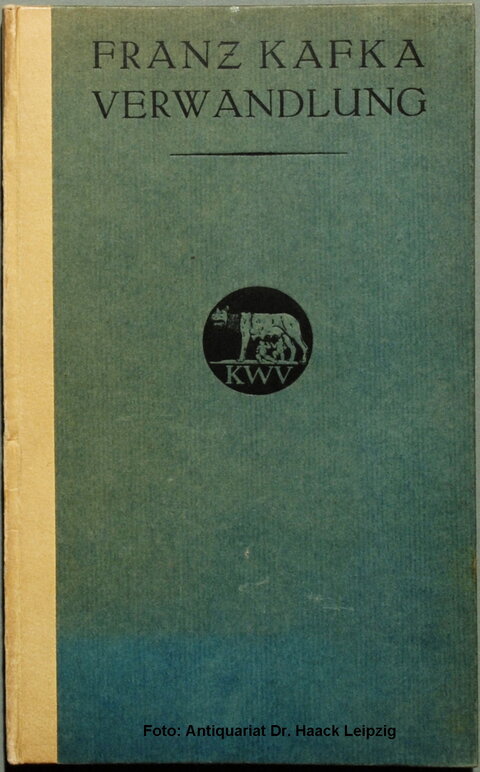
Cover: CC BY 3.0, via Wikimedia Commons — © Foto H.-P.Haack.
The Metamorphosis · 1915-01-01 · Absurdist literature, body horror literature
- Author:
- Franz Kafka
Franz Kafka’s 1915 novella follows the life of Gregor Samsa, a traveling salesman who wakes up one morning to find he has undergone a shocking physical transformation into a giant insect. The story explores the psychological and social consequences of this sudden change as Gregor and his family struggle to cope with his new form. This classic work uses the concept of a biological metamorphosis to examine themes of isolation and human identity.
Domain
- Exam level
- CambridgeCambridgeCambridge English QualificationsThe exam suite from Cambridge University Press & Assessment, from A1 Movers up to C2 Proficiency. The benchmark names double as CEFR labels.C1 AdvancedIELTSIELTSInternational English Language Testing SystemThe 0–9 band test co-owned by the British Council, IDP, and Cambridge. Used for university entry, work, and migration.7.0–8.0TOEFL iBTTOEFL iBTTest of English as a Foreign Language, Internet-Based TestETS's academic English test, the standard route for US university admissions. Scored 0–120, with a 1–6 scale since 2026.1–6 scale: 5.0–5.595–113TOEICTOEICTest of English for International CommunicationETS's workplace English test, big in Japan and Korea. Listening & Reading scores 10–990 and tops out at C1.945–990
- Frequency
- Occasional
- Level
- C1 · Advanced
- Updated
- アルファベット
- 読み方の一覧 →
QR code
englishreference.com/q/metamorphosis
Traducciones: Kaikki.org (Wiktionary), CC BY-SA 4.0