Word
sensibility
Phoneticssen·si·bil·i·ty, stress on the third syllable
US/ˌsɛnsɪˈbɪɫɪti/
UK/sˌɛnsəbˈɪlɪti/
Countable & uncountable
In Japanese
sensitivity; sensibility; susceptibility
Japanese from JMdict (EDRDG), CC BY-SA 4.0. All sources.
Definition
n. the ability to feel or understand things deeply, especially art, beauty, or other people's feelings.
n. the capacity to respond to complex emotional or aesthetic stimuli; a particular way of thinking or feeling about the world.
Examples
“The film appeals to a modern sensibility.”
“The architect's design reflects a minimalist sensibility, focusing on clean lines and natural light rather than decorative details.”
“While the novel was written in the nineteenth century, its psychological depth and focus on individual agency resonate strongly with a contemporary urban sensibility.”
Examples
simple
“The film appeals to a modern sensibility.”
contextual
“The architect's design reflects a minimalist sensibility, focusing on clean lines and natural light rather than decorative details.”
complex
“While the novel was written in the nineteenth century, its psychological depth and focus on individual agency resonate strongly with a contemporary urban sensibility.”
Usage
Often used in the singular to describe a collective cultural or artistic perspective.
Pitfall
He has a high sensibility to pain.
He has a high sensitivity to pain.
Learners often confuse 'sensibility' (artistic/emotional outlook) with 'sensitivity' (physical or emotional responsiveness to stimuli).
Real-World Examples
“But Austen was wise in knowing that human excellence and social order require a balance of both reason and emotion, of sense and sensibility.” “It is the exercise of a practiced sensibility that holds competing goods in tension and acts from within that tension rather than resolving it prematurely.” “How much Marianne learns from Elinor’s “sense”, and how much Elinor learns from Marianne’s “sensibility”, is the stuff of timeless literary debate.” “Photograph: Tom Hearn But if McNeil’s sensibility has barely budged in the last five decades, his lifestyle has by miles.” Etymology
From Late Middle English sensibilite (“physical ability to sense or perceive; sensitivity to pain; type of perception by a sense organ; perception, understanding; image imprinted on the mind during perception; (philosophy) capacity of the soul to receive information from the senses, perceptibility; (in the plural) the senses”), from Middle French sensibilité and Old French sensibilité (“characteristic or state of being capable of sensation”) (modern French sensibilité), and from their etymon Late Latin sēnsibilitās (“intelligence; perception, sensation; sensitiveness; meaning or sense of words”), from Latin sēnsibilis (“detectable; perceptible, sensible”) (from sentiō (“to perceive with the senses, feel, sense; to be aware or sensible of; etc.”) (ultimately from Proto-Indo-European *sent- (“to perceive; to think”)) + -bilis (suffix forming adjectives denoting a capacity or worth of being acted upon)) + -tās (suffix forming abstract nouns denoting states of being). By surface analysis, sensible + -ity (suffix forming nouns). Sense 6 (“in the philosophy of Immanuel Kant: emotion or feeling as opposed to the will”) is a use of the word as a calque of German Sinnlichkeit (“receptivity and devotion to what is experienced by the senses; desire for or openness to eroticism, sensuality”).
Etymology adapted from Wiktionary, available under CC BY-SA 4.0.
Word family
NOUN
ADJECTIVE
ADVERB
In Literature
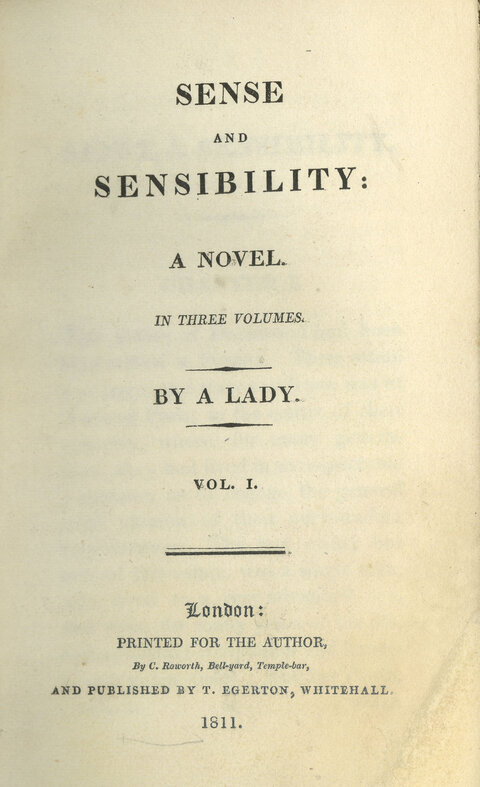
Cover: Public domain, via Wikimedia Commons — Jane Austen (1775-1817).
Sense and Sensibility · 1811-01-01 · Bildungsroman, romantic fiction
- Author:
- Jane Austen
Jane Austen’s 1811 novel explores the contrasting temperaments of two sisters, Elinor and Marianne Dashwood, as they navigate the complexities of love and social status. While Elinor represents logic and restraint, Marianne embodies the trait of sensibility through her intense emotional responses and romantic idealism. The story examines how these different approaches to feeling and understanding the world affect their personal growth and relationships.
Domains
- Exam level
- CambridgeCambridgeCambridge English QualificationsThe exam suite from Cambridge University Press & Assessment, from A1 Movers up to C2 Proficiency. The benchmark names double as CEFR labels.C1 AdvancedIELTSIELTSInternational English Language Testing SystemThe 0–9 band test co-owned by the British Council, IDP, and Cambridge. Used for university entry, work, and migration.7.0–8.0TOEFL iBTTOEFL iBTTest of English as a Foreign Language, Internet-Based TestETS's academic English test, the standard route for US university admissions. Scored 0–120, with a 1–6 scale since 2026.1–6 scale: 5.0–5.595–113TOEICTOEICTest of English for International CommunicationETS's workplace English test, big in Japan and Korea. Listening & Reading scores 10–990 and tops out at C1.945–990EikenEikenTest in Practical English ProficiencyThe English proficiency test from the Eiken Foundation of Japan, widely taken by Japanese students. Grades run from 5 to 1, with Pre-1 and Pre-2 between them.Grade 1
- Frequency
- Frequent
- Level
- C1 · Advanced
- Updated
- アルファベット
- 読み方の一覧 →
QR code
englishreference.com/q/sensibility