Word
passage
Phoneticspas·sage, stress on the first syllable
US/ˈpæsədʒ/
UK/pˈæsɪdʒ/
Definitions
01a corridor or path
B1 · Intermediate Countable noun
n. a long, narrow space that connects one place to another, like a hallway in a building.
n. a narrow path, corridor, or hallway providing a means of transit between two locations.
日本語:通路※
“The dark passage led from the kitchen to the back garden.”
“A secret passage was discovered behind the library's bookshelves, leading directly to the basement of the adjacent manor.”
02section of text or music
B2 · Upper Intermediate Countable noun
n. a short part of a book, speech, or piece of music.
n. a specific excerpt or segment of a literary work, speech, or musical composition.
日本語:節※
“The teacher asked us to read a short passage from the novel.”
“The pianist performed a particularly difficult passage with such grace that the audience remained silent for several seconds after he finished.”
03movement or transition
B2 · Upper Intermediate Uncountable noun
n. the act of moving from one place to another, or the way time goes by.
n. the process of moving through or across something, or the transition from one state or time to another.
日本語:経過※
“The passage of time has changed the way the city looks.”
“The safe passage of the refugees across the border was the primary concern of the international aid agencies.”
04legislative approval
C1 · Advanced Uncountable noun Law Formal
n. the process of a new law being officially accepted by a government.
n. the official approval or enactment of a bill or resolution by a legislative body.
“The passage of the new environmental law took several months of debate.”
“The sudden passage of the emergency bill surprised many political analysts who had predicted a lengthy stalemate in the senate.”
Synonyms
05a sea route
B2 · Upper Intermediate Countable noun Nautical
n. a narrow way through the sea or between islands.
n. a navigable channel or strait, often used in the context of maritime travel.
“The ship took the northern passage to avoid the heavy storms.”
“Explorers spent centuries searching for a Northwest Passage that would link the Atlantic and Pacific oceans through the Arctic.”
06anatomical tube
C1 · Advanced Countable noun Medicine Technical
n. a tube-like part in the body that air or liquid flows through.
n. a duct or canal in the body through which fluids, air, or other substances travel.
“The doctor checked his nasal passages to see why he couldn't breathe well.”
“Inflammation of the bronchial passages can lead to significant respiratory distress if not treated promptly with steroids.”
07to move a pathogen
C2 · Proficiency Science Technical
v. to move a germ or cell from one environment to another in a lab.
v. to transfer a pathogen or cell culture through a series of hosts or growth media.
“Scientists had to passage the virus several times to study how it changed.”
“The researchers decided to passage the strain through avian hosts to observe potential mutations in the protein structure.”
Collocations
Common phrases and expressions where native English speakers use the word “passage” in context.
Verb
01. block the passage
“A fallen tree was blocking the narrow passage through the woods.”
verb + noun
02. guarantee safe passage
“The embassy worked hard to guarantee safe passage for all refugees fleeing the conflict.”
verb + adj + noun
03. read a passage
“The teacher asked the students to read a short passage from the novel aloud.”
verb + noun
Adjective
04. secret passage
“The children were excited to discover a secret passage behind the old bookshelf.”
adj + noun
05. underground passage
“An underground passage connects the two main buildings of the university.”
adj + noun
Noun
06. passage of time
“The old photographs had faded significantly with the passage of time.”
noun + of + noun
07. rite of passage
“In many cultures, graduating from high school is considered an important rite of passage.”
noun + of + noun
Preposition
08. in the passage
“I left my umbrella in the passage near the front door.”
prep + noun
Real-World Examples
“This year, through the first week of September, Panamanian officials recorded just 481 people making the northbound passage.” “Serhiy Oliyinyk, head of the Ukrainian Committee for State TV and Radio Broadcasting’s licensing and distribution control department, told Radio Free Europe (RFE) that the ban was imposed because of a passage that details how 90 Jewish children were shot by Ukrainian militia “to save the feelings of the Sonderkommando”, the work units made up of the Nazis’ death camp prisoners.” “But, for the 23-year-old, it is also a passage into a different, freer world - where she can find answers to forbidden questions.” “The result leaves Celtic in a strong position heading into the second leg in Ried next Tuesday, needing to avoid a heavy defeat to secure passage into the Champions League.” Etymology
Borrowed into Middle English from Old French passage, from passer (“to pass”).
From French passager, from Italian passeggiare.
Etymology adapted from Wiktionary, available under CC BY-SA 4.0.
Word family
VERB
NOUN
Related words
Idioms
In Literature
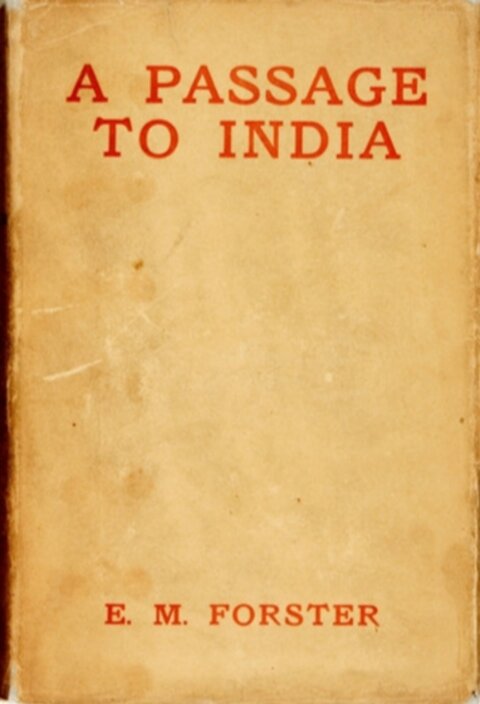
Cover: PD-US, via Wikimedia Commons — E.M. Forster (Life time: 1879-1970).
A Passage to India · 1924-06-04 · Novel
- Author:
- E. M. Forster
E. M. Forster’s 1924 novel explores the complex social tensions between British colonial officials and Indian citizens during the British Raj. The title reflects the physical and cultural journey of the characters as they attempt to bridge the divide between their two worlds. Ultimately, the story questions whether a true connection or transition between these conflicting societies is possible.
Domains
- Exam level
- CambridgeCambridgeCambridge English QualificationsThe exam suite from Cambridge University Press & Assessment, from A1 Movers up to C2 Proficiency. The benchmark names double as CEFR labels.B2 FirstIELTSIELTSInternational English Language Testing SystemThe 0–9 band test co-owned by the British Council, IDP, and Cambridge. Used for university entry, work, and migration.5.5–6.5TOEFL iBTTOEFL iBTTest of English as a Foreign Language, Internet-Based TestETS's academic English test, the standard route for US university admissions. Scored 0–120, with a 1–6 scale since 2026.1–6 scale: 4.0–4.572–94TOEICTOEICTest of English for International CommunicationETS's workplace English test, big in Japan and Korea. Listening & Reading scores 10–990 and tops out at C1.785–944
- Frequency
- Common
- Level
- B2 · Upper IntermediateOxford
- Updated
- アルファベット
- 読み方の一覧 →
QR code
englishreference.com/q/passage
※ 機械で選んだ訳語です。ネイティブスピーカーによる確認はまだです。
「日本語」 data: JMdict (EDRDG), CC BY-SA 4.0