Word
beelzebub
Phoneticsbeelze·bub
/biˈɛlzəˌbʌb/
Countable noun
Definition
n. another name for the Devil or a very powerful evil spirit. In some stories, he is a prince of demons who serves Satan.
n. a name for the Devil or a high-ranking demon in Christian and Jewish traditions. Often identified as one of the seven princes of Hell in demonology.
Examples
“The old stories warn of the tricks played by Beelzebub.”
“In Milton's epic poem, Beelzebub is depicted as a powerful fallen angel who ranks second only to Satan himself.”
Examples
simple
“The old stories warn of the tricks played by Beelzebub.”
contextual
“In Milton's epic poem, Beelzebub is depicted as a powerful fallen angel who ranks second only to Satan himself.”
Collocations
Common phrases and expressions where native English speakers use the word “beelzebub” in context.
Verb
01. beelzebub reigns
“In this dark mythology, Beelzebub reigns over the order of the fly.”
noun + verb
02. exorcise beelzebub
“The priest claimed he could exorcise Beelzebub from the possessed man.”
verb + noun
03. invoke beelzebub
“The cult was accused of attempting to invoke Beelzebub through forbidden rituals.”
verb + noun
04. serve beelzebub
“The fallen angels were sworn to serve Beelzebub in the eternal war against heaven.”
verb + noun
Adjective
05. infernal beelzebub
“Milton portrays the infernal Beelzebub as Satan's chief lieutenant in Pandemonium.”
adj + noun
06. malevolent beelzebub
“The text depicts a malevolent Beelzebub orchestrating the fall of lesser spirits.”
adj + noun
Noun
07. minion of beelzebub
“The antagonist was described as a mere minion of Beelzebub, carrying out his dark will.”
noun + prep + noun
08. prince beelzebub
“The grimoire refers to the prince Beelzebub as a high-ranking lord of the abyss.”
noun + noun
09. cast out beelzebub
“The scripture discusses the controversy of whether one can cast out Beelzebub by the power of demons.”
10. worship the lord beelzebub
“Ancient heretics were rumored to worship the lord Beelzebub in secret forest gatherings.”
Usage
When referring to the specific religious figure, it is treated as a proper noun and capitalized.
Real-World Examples
“Beelzebub, or Baalzebûb, the Philistine god of Accaron (Ekron), scarcely 25 miles west of Jerusalem, whose oracle King Ochozias sought, is usually identified with the evil spirit Beelzeboul in the New Testament.” “Popular consensus equates Beelzebul with Satan, a connection that dates back to the identification of Beelzebub as the prince of demons.” Etymology
Derived from the Hebrew 'Ba'al Zevuv', which literally translates to 'Lord of the Flies'. It was originally the name of a Philistine god, later adapted into Jewish and Christian texts as a name for a major demon.
Etymology adapted from Wiktionary, available under CC BY-SA 4.0.
In Literature
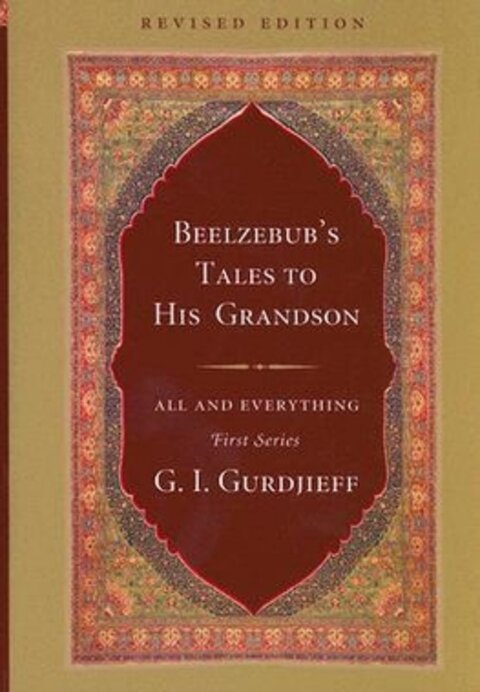
Cover shown under fair use for identification and commentary.
Beelzebub's Tales to His Grandson · 1950-01-01 · Fiction
- Author:
- George Gurdjieff
A 1950 novel by G. I. Gurdjieff, narrated by Beelzebub, a devil who writes letters to his grandson about life on Earth. The title uses Beelzebub as the name of a demon, the same figure as in the Bible.
- Exam level
- CambridgeCambridgeCambridge English QualificationsThe exam suite from Cambridge University Press & Assessment, from A1 Movers up to C2 Proficiency. The benchmark names double as CEFR labels.C2 ProficiencyIELTSIELTSInternational English Language Testing SystemThe 0–9 band test co-owned by the British Council, IDP, and Cambridge. Used for university entry, work, and migration.8.5–9.0TOEFL iBTTOEFL iBTTest of English as a Foreign Language, Internet-Based TestETS's academic English test, the standard route for US university admissions. Scored 0–120, with a 1–6 scale since 2026.1–6 scale: 6.0114–120
- Frequency
- Rare
- Level
- C2 · Proficiency
- Updated
- アルファベット
- 読み方の一覧 →
QR code
englishreference.com/q/beelzebub