Definitions
01travelling show
A2 · Elementary Countable noun
n. a group of performers like clowns, acrobats, and magicians who travel to different places to put on shows.
n. a travelling company of performers, typically including acrobats, clowns, and trained animals, performing in a circular arena.
“The children were excited when the circus came to town and set up a big tent.”
“The traditional circus featured a variety of death-defying aerial acts and slapstick comedy routines that appealed to audiences of all ages.”
02chaotic situation
B2 · Upper Intermediate Countable noun Informal
n. a place or event that is very noisy, busy, or disorganized.
n. a situation characterized by noisy, confused, or excessive activity; often used to describe media frenzies or disorganized events.
“The office became a total circus as everyone tried to finish their reports at the last minute.”
“The trial turned into a media circus, with hundreds of reporters camped outside the courthouse vying for a single quote from the lawyers.”
03circular junction
B2 · Upper Intermediate Countable noun British English
n. a round open area in a city where several streets meet.
n. a circular open space at the intersection of several streets, common in British urban planning.
“We met our friends at Piccadilly Circus before going to see a play.”
“The city's most famous circus serves as a major transport hub, connecting four primary arterial roads in the heart of the shopping district.”
Synonyms
04ancient Roman arena
C1 · Advanced Countable noun Technical
n. a large, long building used for chariot races in ancient Rome.
n. an ancient Roman roofless enclosure, usually oblong with rounded ends, used primarily for chariot racing and gladiatorial games.
“The guide showed us the ruins of the ancient circus where chariots once raced.”
“Archaeological excavations revealed the original foundations of the circus, providing insight into the massive scale of Roman public entertainment.”
05to perform or display
C2 · Proficiency Literary
v. to perform in a circus or to show something off in a loud, public way.
v. to perform in or as if in a circus; to parade or display something in a theatrical or public manner.
“The politician circused his ideas across the country to gain more votes.”
“The troupe circused through the provinces, bringing a fleeting sense of wonder to the isolated rural communities they visited.”
Etymology
From Middle English circus, circo, from Latin circus (“ring, circle”), from Ancient Greek κρίκος (kríkos), κίρκος (kírkos, “ring”), from Proto-Indo-European *(s)ker- (“to bend, turn”). Doublet of cirque. Cognate with Old English hring (whence English ring) and Old English hringsetl (“circus”, literally “ring-seat”).
Etymology adapted from Wiktionary, available under CC BY-SA 4.0.
Related words
Idioms
Stories
Empire & the Arena · See all Roman origin
Emperors, spectacle, and the machinery of keeping a city entertained.
bread and circuses — Food and entertainment handed out by those in power to keep the public quiet.
a Roman holiday — Enjoyment taken from watching somebody else suffer.
fiddle while Rome burns — To busy yourself with trivia while a disaster you could be addressing unfolds.
Triumph — a great victory or a very successful result. You use this word when someone wins something difficult or achieves a big goal.
Laurel — an evergreen tree with shiny leaves that people used to make crowns for winners in ancient times. Today, it is often used to talk about honor or success.
rest on one's laurels — To rely on past success and stop making the effort to keep improving.
The word in film
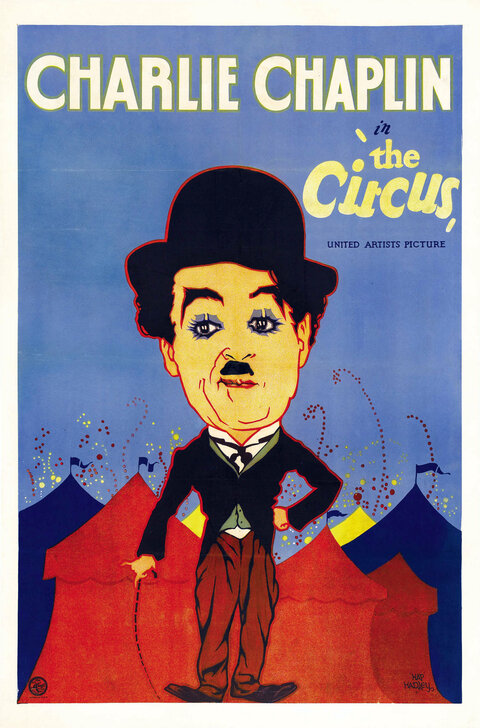
Poster: Public domain, via Wikimedia Commons.
The Circus · 1928 · Comedy
- Directed by:
- Charlie Chaplin
- Starring:
- Henry Bergman, Al Ernest Garcia, Merna Kennedy
Charlie Chaplin directed and starred in this silent comedy about a poor man who accidentally becomes a star performer. The story follows his funny adventures as he joins a group of traveling entertainers and falls in love with a horse rider.
Domains
- Exam level
- CambridgeCambridgeCambridge English QualificationsThe exam suite from Cambridge University Press & Assessment, from A1 Movers up to C2 Proficiency. The benchmark names double as CEFR labels.A2 KeyIELTSIELTSInternational English Language Testing SystemThe 0–9 band test co-owned by the British Council, IDP, and Cambridge. Used for university entry, work, and migration.3.0–4.0TOEFL iBTTOEFL iBTTest of English as a Foreign Language, Internet-Based TestETS's academic English test, the standard route for US university admissions. Scored 0–120, with a 1–6 scale since 2026.1–6 scale: 2.0–2.524–43TOEICTOEICTest of English for International CommunicationETS's workplace English test, big in Japan and Korea. Listening & Reading scores 10–990 and tops out at C1.225–549
- Frequency
- Frequent
- Level
- A2 · Elementary
- Updated
- アルファベット
- 読み方の一覧 →
QR code
englishreference.com/q/circus
「カタカナ語」 data: JMdict (EDRDG), CC BY-SA 4.0
‘외래어’ data: 한국어기초사전 (국립국어원), CC BY-SA 2.0 KR