Word
immortal
Phoneticsim·mor·tal, stress on the second syllable
US/ˌɪˈmɔɹtəɫ/
UK/ɪmˈɔːtəl/
Definitions
01living forever
B2 · Upper Intermediate Religion
adj. living forever and never dying.
adj. exempt from death or mortality; living eternally.
“In many ancient stories, the gods are immortal and live on a high mountain.”
“The myth describes a hero who sought an immortal existence, only to realise that eternal life without eternal youth was a curse.”
Synonyms
Antonyms
02famous forever
B2 · Upper Intermediate
adj. so famous or important that people will never forget them.
adj. deserving of or possessing everlasting fame; enduring through time.
“Shakespeare's immortal plays are still performed all over the world today.”
“The composer achieved immortal fame with his final symphony, which remains a cornerstone of the classical repertoire centuries later.”
03a being who lives forever
B2 · Upper Intermediate Countable noun Religion
n. a being, like a god, who can never die.
n. a being, typically a deity or supernatural entity, who is not subject to death.
“The Greeks believed that the immortals watched over the lives of humans.”
“The epic poem contrasts the petty squabbles of the immortals with the tragic, brief lives of the soldiers on the battlefield.”
Antonyms
04a very famous person
C1 · Advanced Countable noun Literary
n. a person who is so famous in their field that they will always be remembered.
n. a person of such eminence that their fame is considered enduring or permanent.
“The young player was delighted to be mentioned alongside the immortals of the game.”
“By winning his fifth consecutive title, he secured his place among the sporting immortals.”
Real-World Examples
“Today, though, the main reason Flamel continues to fascinate people is his immortal life in books and art, says Bitouzet.” “Every major religion holds that our mortal body matters less than our immortal soul, and we teach our children that it is what we are like on the inside—the unseen side—that counts.” “There was a definite marriage of what’s mortal and immortal, because of the interweaving of their own language right next to Shakespeare.” Etymology
From Latin immortālis, from prefix im- (“not”) (from in-) + mortālis (“mortal”) (from mors (“death”), combining form mort- + adjectival suffix -alis), equivalent to im- + mortal. Displaced native undeadly, from Old English undēadlīċ. The term referring to the Persian soldiers was a Calque of Ancient Greek ἀθάνατος (athánatos). One suggestion claimed that "Immortals" were named by the ancient Greeks because wounded soldiers were quickly replaced, while another claimed that it was because Greek informants confused Old Persian anauša- (“immortal, without death”) with Old Persian anūšiya- (“companion, royal bodyguard”).
Etymology adapted from Wiktionary, available under CC BY-SA 4.0.
Word family
NOUN
ADJECTIVE
In Music
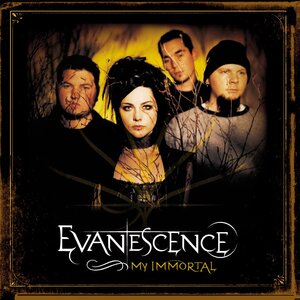
Cover shown under fair use for identification and commentary.
My Immortal · 2003 · Alternative metal
- Artist:
- Evanescence
- Album:
- Fallen
Evanescence released this haunting piano ballad as the third single from their 2003 debut album, Fallen. The title uses the word as a noun to describe a spirit or being that remains with the singer forever. It reflects a sense of lingering presence that can never truly die or leave.
Domains
- Exam level
- CambridgeCambridgeCambridge English QualificationsThe exam suite from Cambridge University Press & Assessment, from A1 Movers up to C2 Proficiency. The benchmark names double as CEFR labels.B2 FirstIELTSIELTSInternational English Language Testing SystemThe 0–9 band test co-owned by the British Council, IDP, and Cambridge. Used for university entry, work, and migration.5.5–6.5TOEFL iBTTOEFL iBTTest of English as a Foreign Language, Internet-Based TestETS's academic English test, the standard route for US university admissions. Scored 0–120, with a 1–6 scale since 2026.1–6 scale: 4.0–4.572–94TOEICTOEICTest of English for International CommunicationETS's workplace English test, big in Japan and Korea. Listening & Reading scores 10–990 and tops out at C1.785–944
- Frequency
- Frequent
- Level
- B2 · Upper Intermediate
- Updated
- アルファベット
- 読み方の一覧 →
QR code
englishreference.com/q/immortal