Word
liberation
Phoneticslib·er·a·tion, stress on the third syllable
US/ˌɫɪˌbɝˈeɪʃən/
UK/lˌɪbəɹˈeɪʃən/
Definitions
01setting free
B2 · Upper Intermediate Uncountable noun
n. the act of setting a person or a place free from imprisonment or enemy control.
n. the act of setting someone free from imprisonment, slavery, or oppression; the release of a country from occupation.
“The liberation of the city was celebrated with a huge parade in the streets.”
“Following years of brutal occupation, the liberation of the capital marked a definitive turning point in the regional conflict.”
Synonyms
Antonyms
02social equality
B2 · Upper Intermediate Uncountable noun Politics
n. the movement to get equal rights and freedom for a specific group of people.
n. the achievement of equal social rights and status, specifically freedom from historical or structural prejudice.
“The women's liberation movement changed how people thought about work and home.”
“The seminar focused on the history of various liberation movements and their impact on contemporary civil rights legislation.”
Antonyms
03stealing or taking
C1 · Advanced Uncountable noun Humorous · Informal
n. a funny or polite way to say you took something that does not belong to you.
n. a euphemistic or ironic reference to the act of taking or stealing something.
“I noticed the 'liberation' of a few pens from the office supply cabinet.”
“He jokingly referred to the 'liberation' of his roommate's leftover pizza as a necessary intervention for the sake of fridge space.”
Teaching tip
This sense is purely ironic; using it in a serious context will make you sound like you are admitting to a crime while trying to hide it.
Synonyms
Collocations
Common phrases and expressions where native English speakers use the word “liberation” in context.
Verb
01. achieve liberation
“The movement worked tirelessly for decades to achieve liberation from colonial rule.”
verb + noun
02. struggle for liberation
“Many activists spent their entire lives involved in the struggle for liberation.”
verb + prep + noun
Adjective
03. national liberation
“The national liberation front led the uprising against the occupying forces.”
adj + noun
04. total liberation
“The treaty promised nothing less than the total liberation of all political prisoners.”
adj + noun
Noun
05. liberation movement
“She joined the women's liberation movement to fight for equal pay and representation.”
noun + noun
06. war of liberation
“The country celebrates the anniversary of the war of liberation every spring.”
noun + of + noun
Preposition
07. after the liberation
“Economic recovery began slowly in the years immediately after the liberation.”
prep + noun
Real-World Examples
“The announcement caught South Korean officials off guard, landing on a public holiday marking the country’s liberation from Japanese colonial rule, and set off a scramble in Seoul and Washington, DC.” “Tupac's mother Afeni was a Black Panther and he grew up around the black liberation movement.” Etymology
Borrowed from Middle French libération, and from Latin liberatio, liberationem (“a freeing”), from liberare past participle liberatus (“set free”); see liberate. Equivalent to liberate + -ion.
Etymology adapted from Wiktionary, available under CC BY-SA 4.0.
Word family
VERB
NOUN
In Music
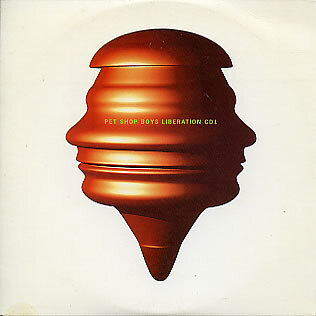
Cover shown under fair use for identification and commentary.
Liberation · 1994 · Synth-pop
- Artist:
- Pet Shop Boys
- Album:
- Very
This 1994 synth-pop single by the Pet Shop Boys explores the feeling of being released from a difficult situation. The title uses the word in a figurative sense to describe the emotional freedom and relief found through a new romantic connection.
Domain
- Exam level
- CambridgeCambridgeCambridge English QualificationsThe exam suite from Cambridge University Press & Assessment, from A1 Movers up to C2 Proficiency. The benchmark names double as CEFR labels.C1 AdvancedIELTSIELTSInternational English Language Testing SystemThe 0–9 band test co-owned by the British Council, IDP, and Cambridge. Used for university entry, work, and migration.7.0–8.0TOEFL iBTTOEFL iBTTest of English as a Foreign Language, Internet-Based TestETS's academic English test, the standard route for US university admissions. Scored 0–120, with a 1–6 scale since 2026.1–6 scale: 5.0–5.595–113TOEICTOEICTest of English for International CommunicationETS's workplace English test, big in Japan and Korea. Listening & Reading scores 10–990 and tops out at C1.945–990
- Frequency
- Frequent
- Level
- C1 · AdvancedOxford
- Updated
- アルファベット
- 読み方の一覧 →
QR code
englishreference.com/q/liberation