Word
prejudice
Phoneticsprej·u·dice, stress on the first syllable
US/ˈpɹɛdʒədɪs/
UK/pɹˈɛdʒuːdɪs/
Definitions
01unfair dislike
B2 · Upper Intermediate Uncountable noun
n. an unfair feeling of dislike for a person or group because of their race, sex, or religion.
n. an irrational hostile attitude or preconceived negative judgment directed toward a particular group, race, or religion.
日本語:偏見※
“The company was accused of prejudice against older workers during the hiring process.”
“Deep-seated racial prejudice within the local administration prevented the community from accessing the resources they had been promised.”
Synonyms
Antonyms
02preconceived opinion
C1 · Advanced Countable noun Academic
n. an opinion you form about something before you have enough information.
n. a preconceived opinion or feeling, whether positive or negative, formed without prior knowledge or experience.
日本語:先入観※
“I had a prejudice against the city before I visited, but I actually loved it.”
“The researcher struggled to set aside her personal prejudices to ensure the study remained objective and data-driven.”
Synonyms
Antonyms
03to influence unfairly
C1 · Advanced Law Formal
v. to make someone form an unfair opinion about something.
v. to influence someone's opinion so that they may be less able to judge fairly.
“The news reports might prejudice the jury before the trial even begins.”
“The judge warned the media that excessive coverage could prejudice the outcome of the trial by influencing potential jurors.”
Usage
The verb is transitive and always takes a direct object, often a person or a group's mind.
04to harm or damage
C2 · Proficiency Law Formal · Technical
v. to do something that has a bad effect on a situation or a person's chances.
v. to cause damage or injury to a person's rights, interests, or legal standing.
“Missing the deadline could prejudice your chances of getting the loan.”
“The witness's refusal to testify did not prejudice the defendant's right to a fair hearing under the current statutes.”
Usage
Commonly used in the phrase 'without prejudice', meaning without affecting existing rights.
Collocations
Common phrases and expressions where native English speakers use the word “prejudice” in context.
Verb
01. harbor prejudice against people
“The investigation revealed that the officer harbored deep-seated prejudice against people from minority backgrounds.”
verb + noun + prep + noun
02. overcome prejudice
“It took years for the community to overcome prejudice against the new immigrants.”
verb + noun
03. reinforce prejudice
“Media stereotypes often serve to reinforce prejudice rather than challenge it.”
verb + noun
Adjective
04. blatant prejudice
“She was shocked by the blatant prejudice she encountered during the job interview.”
adj + noun
05. deep-seated prejudice
“The conflict is fueled by deep-seated prejudice that has existed for generations.”
adj + noun
06. unconscious prejudice
“Many companies are implementing training to help employees recognize their unconscious prejudice.”
adj + noun
Noun
07. victim of prejudice
“He felt like a victim of prejudice after being passed over for the promotion despite his qualifications.”
noun + of + noun
Preposition
08. without prejudice
“The legal settlement was made without prejudice to any future claims.”
prep + noun
Real-World Examples
“At the same time, a growing number of studies are showing that Democrats and liberals have responded to Trump’s dominant role in American politics by becoming noticeably less prejudiced and more open to diversity and growing minority populations.” “Then the Civil War upended the family’s life, first by reviving antisemitic prejudices and then, eventually, by destroying the family’s business.” “Baroness Hallett ordered that testimony from senior government officials had to be heard behind closed doors so as not to prejudice an ongoing criminal investigation by the National Crime Agency (NCA).” “One word for the expressions of subtle prejudice is ‘microaggressions’.” Etymology
From Middle English prejudice, from Old French prejudice, derived from Latin praeiūdicium (“previous judgment or damage”), from prae- (“before”) + iūdicium (“judgment”).
Etymology adapted from Wiktionary, available under CC BY-SA 4.0.
Word family
NOUN
ADJECTIVE
Related words
In Literature
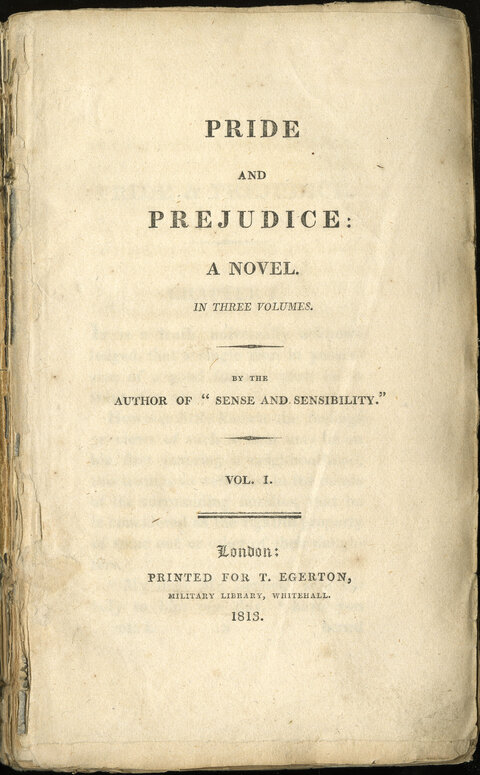
Cover: Public domain, via Wikimedia Commons — Jane Austen (1775-1817).
Pride and Prejudice · 1813-01-28 · Novel of manners, psychological fiction
- Author:
- Jane Austen
Jane Austen’s classic 1813 novel follows the spirited Elizabeth Bennet as she navigates the social pressures of the English gentry. The story explores how first impressions can lead to a preconceived opinion, showing how Elizabeth must overcome her initial bias against the wealthy Mr. Darcy to find true understanding. It highlights the danger of judging others before having enough information about their character.
- Exam level
- CambridgeCambridgeCambridge English QualificationsThe exam suite from Cambridge University Press & Assessment, from A1 Movers up to C2 Proficiency. The benchmark names double as CEFR labels.C1 AdvancedIELTSIELTSInternational English Language Testing SystemThe 0–9 band test co-owned by the British Council, IDP, and Cambridge. Used for university entry, work, and migration.7.0–8.0TOEFL iBTTOEFL iBTTest of English as a Foreign Language, Internet-Based TestETS's academic English test, the standard route for US university admissions. Scored 0–120, with a 1–6 scale since 2026.1–6 scale: 5.0–5.595–113TOEICTOEICTest of English for International CommunicationETS's workplace English test, big in Japan and Korea. Listening & Reading scores 10–990 and tops out at C1.945–990
- Frequency
- Frequent
- Level
- C1 · AdvancedOxford
- Updated
- アルファベット
- 読み方の一覧 →
QR code
englishreference.com/q/prejudice
※ 機械で選んだ訳語です。ネイティブスピーカーによる確認はまだです。
「日本語」 data: JMdict (EDRDG), CC BY-SA 4.0