Word
Definitions
01attractive to look at
A1 · Beginner
adj. very attractive to look at; having a high level of beauty.
adj. possessing qualities that give great aesthetic pleasure to the eye; physically attractive.
日本語:美しい※
“The view from the top of the mountain was absolutely beautiful.”
“The sunlight filtered through the stained glass, casting beautiful patterns of crimson and gold across the cathedral floor.”
Pitfall
He is a beautiful man.
He is a handsome man.
While 'beautiful' can describe men, 'handsome' is the more common and traditional choice for adult males in English.
02pleasing to other senses
A2 · Elementary
adj. very pleasant to hear, feel, or experience.
adj. affording great sensory pleasure, particularly through sound or emotional experience.
日本語:美しい※
“The singer has a beautiful voice that makes everyone stop and listen.”
“The orchestra delivered a beautiful performance of the symphony, capturing the delicate nuances of the composer's final work.”
Synonyms
Antonyms
03excellent or elegant
B2 · Upper Intermediate
adj. done very well or having a very high quality.
adj. characterised by intellectual or moral excellence, or by perfect suitability and elegance.
日本語:見事※
“That was a beautiful goal in the final minute of the game.”
“The mathematician provided a beautiful solution to the problem, using a logic that was both simple and undeniably elegant.”
Collocations
Common phrases and expressions where native English speakers use the word “beautiful” in context.
Etymology
Etymology tree Proto-Indo-European *dewh₂-der.? Proto-Italic *dwenos Old Latin duenos Old Latin duonusder. Old Latin *duenelos Vulgar Latin bellus Proto-Indo-European *-teh₂ Proto-Indo-European *-ts Proto-Indo-European *-teh₂ts Proto-Italic *-tāts Vulgar Latin -tās Vulgar Latin *bellitātem Anglo-Norman biautébor. Middle English beaute Proto-Indo-European *pleh₁- Proto-Indo-European *-nós Proto-Indo-European *pl̥h₁nós Proto-Germanic *fullaz Proto-Germanic *-fullaz Old English -ful Middle English -ful Middle English bewteful English beautiful From Middle English bewteful, beautefull (“attractive to the eye, beautiful”), equivalent to beauty + -ful. In this sense, largely displaced Old English fæġer (whence fair).
Etymology adapted from Wiktionary, available under CC BY-SA 4.0.
Word family
ADJECTIVE
ADVERB
Idioms
In Music
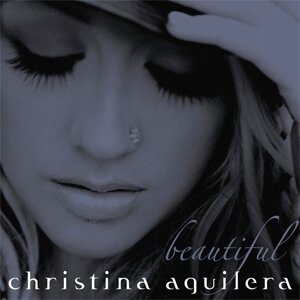
Cover shown under fair use for identification and commentary.
Beautiful · 2002
- Artist:
- Christina Aguilera
- Album:
- Stripped
Christina Aguilera’s 2002 pop ballad explores the emotional side of this adjective, focusing on self-esteem and inner worth. The title uses the word to describe a person's inherent value and attractiveness, even when they feel insecure or judged by others.
- Exam level
- CambridgeCambridgeCambridge English QualificationsThe exam suite from Cambridge University Press & Assessment, from A1 Movers up to C2 Proficiency. The benchmark names double as CEFR labels.A1 MoversIELTSIELTSInternational English Language Testing SystemThe 0–9 band test co-owned by the British Council, IDP, and Cambridge. Used for university entry, work, and migration.2.0–3.0TOEFL iBTTOEFL iBTTest of English as a Foreign Language, Internet-Based TestETS's academic English test, the standard route for US university admissions. Scored 0–120, with a 1–6 scale since 2026.1–6 scale: 1.0–1.50–23TOEICTOEICTest of English for International CommunicationETS's workplace English test, big in Japan and Korea. Listening & Reading scores 10–990 and tops out at C1.120–224
- Frequency
- Very common
- Level
- A1 · BeginnerOxford
- Updated
- アルファベット
- 読み方の一覧 →
QR code
englishreference.com/q/beautiful
※ 機械で選んだ訳語です。ネイティブスピーカーによる確認はまだです。
「日本語」「カタカナ語」 data: JMdict (EDRDG), CC BY-SA 4.0