Word
wicked
/ˈwɪkəd/
Definitions
01evil or morally bad
B1 · Intermediate
adj. morally bad, evil, or very cruel.
adj. morally depraved or sinful; characterized by a deliberate intent to cause harm or violate moral laws.
“In the story, the wicked queen tries to trick the princess with a poisoned apple.”
“The philosopher argued that no human is born truly wicked, but rather that circumstances and choices shape a person's moral character.”
02excellent or cool
B2 · Upper Intermediate Informal · Slang
adj. very good, impressive, or cool.
adj. denoting excellence or high quality; used as a positive evaluative descriptor in informal contexts.
“That was a wicked guitar solo at the end of the song.”
“The skaters were performing some wicked tricks at the park, drawing a large crowd of impressed teenagers.”
Teaching tip
This sense is common in British English and certain American dialects; it is highly informal and should be avoided in professional writing.
03severe or harsh
C1 · Advanced Literary
adj. very strong, unpleasant, or difficult to deal with.
adj. characterized by extreme intensity, often in a way that causes discomfort or distress.
“A wicked storm blew through the town, knocking down several old trees.”
“The hikers were forced to turn back when a wicked wind began to howl across the exposed ridge.”
Usage
Often used to describe weather, pain, or physical sensations.
04very or extremely
C1 · Advanced American English · Dialect · Slang
adv. used to mean 'very' or 'extremely' to make an adjective stronger.
adv. used as an intensifier to modify adjectives or adverbs; highly characteristic of specific regional dialects.
Español:muy
“The movie we saw last night was wicked funny.”
“The traffic on the bridge was wicked slow this morning due to the construction work.”
Teaching tip
This is a famous marker of the Boston (New England) accent in the United States; using it elsewhere might sound unnatural unless you are mimicking that specific dialect.
Etymology
From Middle English wicked, wikked, an alteration of Middle English wicke, wikke (“morally perverse, evil, wicked”). Of uncertain origin. Possibly from an adjectival use of Old English wiċċa (“wizard, sorcerer”), from Proto-West Germanic *wikkō (“necromancer, sorcerer”), though the phonology makes this theory difficult to explain. Alternatively, perhaps related to English wicker, Old Norse víkja (“to bend to, yield, turn, move”), Swedish vika (“to bend, fold, give way to”), English weak. The "excellent, awesome" sense is an ameliorative semantic shift from the original sense of "evil, mischievous". Compare similar semantic development in terrific and sick.
See wick.
Etymology adapted from Wiktionary, available under CC BY-SA 4.0.
Word family
NOUN
ADJECTIVE
Idioms
01. wicked tongue
In Music
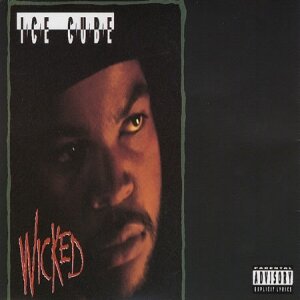
Cover shown under fair use for identification and commentary.
Wicked · 1992 · Hip-hop
- Artist:
- Ice Cube
- Album:
- The Predator
Ice Cube released this heavy hip-hop track in 1992 as the lead single from his third album. The title uses the word in a positive, casual way to describe something that is impressive or cool. It reflects the popular slang of the era where words with negative origins were used to show approval.
- Exam level
- CambridgeCambridgeCambridge English QualificationsThe exam suite from Cambridge University Press & Assessment, from A1 Movers up to C2 Proficiency. The benchmark names double as CEFR labels.B1 PreliminaryIELTSIELTSInternational English Language Testing SystemThe 0–9 band test co-owned by the British Council, IDP, and Cambridge. Used for university entry, work, and migration.4.0–5.0TOEFL iBTTOEFL iBTTest of English as a Foreign Language, Internet-Based TestETS's academic English test, the standard route for US university admissions. Scored 0–120, with a 1–6 scale since 2026.1–6 scale: 3.0–3.544–71TOEICTOEICTest of English for International CommunicationETS's workplace English test, big in Japan and Korea. Listening & Reading scores 10–990 and tops out at C1.550–784
- Frequency
- Frequent
- Level
- B1 · Intermediate
- Updated
- アルファベット
- 読み方の一覧 →
QR code
englishreference.com/q/wicked
Traducciones: Kaikki.org (Wiktionary), CC BY-SA 4.0