Word
darkness
Phoneticsdark·ness, stress on the first syllable
US/ˈdɑɹknəs/
UK/dˈɑːknəs/
Definitions
01absence of light
A2 · Elementary Uncountable noun
n. a state where there is little or no light, making it difficult to see.
n. the total or partial absence of light in a physical space.
“The power went out and the room was plunged into total darkness.”
“The hikers struggled to find the trail in the absolute darkness of the forest after their only flashlight failed.”
Usage
Usually uncountable, but can take an article when describing a specific type of dark environment.
Antonyms
02nighttime
B1 · Intermediate Uncountable noun
n. the time of day when it is dark outside, usually after the sun goes down.
n. the period of night or the onset of nightfall.
“It is safer to finish your walk before darkness falls.”
“They preferred to travel under the cover of darkness to avoid the sweltering heat of the desert sun.”
03sadness or evil
B2 · Upper Intermediate Uncountable noun Literary
n. a feeling of being very unhappy, or a quality that seems scary and evil.
n. a metaphorical state of gloom, depression, or moral wickedness.
Español:tinieblas
“The movie tells a story about the darkness inside a person's heart.”
“The poet used the image of encroaching darkness to symbolize the protagonist's growing despair and isolation from society.”
Usage
Often used in literature to represent internal struggle or external threats.
Teaching tip
Remind students that this is a common metaphor in English stories and films.
Synonyms
04lack of knowledge
C1 · Advanced Uncountable noun Formal · Literary
n. a state of not knowing or understanding something.
n. a state of ignorance or a lack of information regarding a specific subject.
“For many years, the public was kept in darkness about the government's secret plans.”
“The historical records are thin, leaving much of the civilization's daily life shrouded in darkness.”
Usage
Commonly found in the phrase 'in the darkness' regarding information.
Teaching tip
In modern business English, 'in the dark' is much more common than 'in the darkness' for this meaning.
Antonyms
Collocations
Common phrases and expressions where native English speakers use the word “darkness” in context.
Verb
01. emerge from the darkness
“A tall figure suddenly emerged from the darkness of the alleyway.”
verb + prep + noun
02. peer into the darkness
“She peered into the darkness, trying to see if anyone was following her.”
verb + prep + noun
03. plunge into darkness
“The storm caused a blackout that plunged the neighborhood into darkness.”
verb + prep + noun
Adjective
04. pitch darkness
“We couldn't see a thing because the room was in pitch darkness.”
adj + noun
05. total darkness
“The power failure left the entire city in total darkness for several hours.”
adj + noun
Noun
06. cloak of darkness
“The soldiers moved under a cloak of darkness to avoid being spotted by the enemy.”
noun + of + noun
Preposition
07. in the darkness
“They sat together in the darkness, listening to the sound of the rain.”
prep + noun
08. shrouded in darkness
“The old castle remained shrouded in darkness throughout the winter night.”
prep + noun
Real-World Examples
“For about 40 minutes, the four astronauts will be alone, each with their own thoughts and feelings, travelling through the darkness of space.” “By embracing the darkness, we enhance the survival chances of nocturnal life.” “The darkness is diminishing at an unprecedented rate in human history—80% of the global population can no longer witness the Milky Way in the night sky, and this figure rises to 99% for the U.S.” “In the Anglophone world, darkness has several symbolic meanings, few of them positive.” Etymology
From Middle English derknesse, from Old English deorcnes; equivalent to dark + -ness.
Etymology adapted from Wiktionary, available under CC BY-SA 4.0.
Word family
NOUN
ADJECTIVE
ADVERB
In Literature
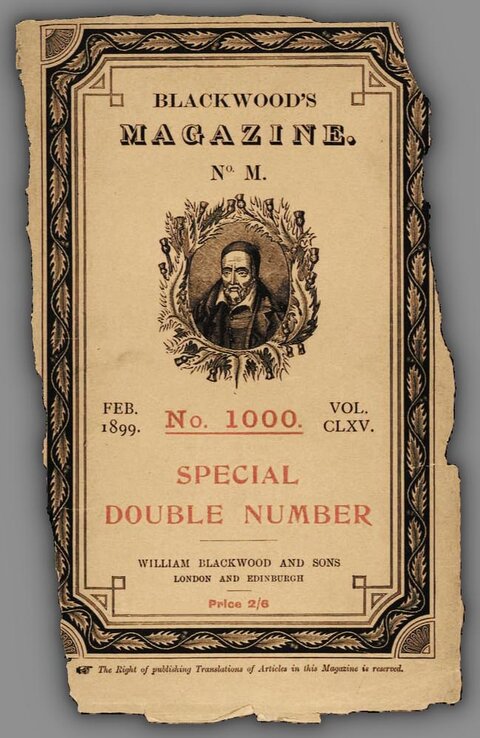
Cover: Public domain, via Wikimedia Commons — William Blackwood (Life time: November 20, 1776 – September 16, 1834).
Heart of Darkness · 1899-01-01 · Fiction literature, historical fiction
- Author:
- Joseph Conrad
Joseph Conrad’s 1899 novella follows Charles Marlow as he travels deep into the African interior to find a mysterious ivory trader named Kurtz. The title reflects the story's exploration of the moral corruption and hidden evil that can exist within the human soul. As Marlow journeys further into the wilderness, he confronts the metaphorical shadows of colonialism and the cruelty it produces.
- Exam level
- CambridgeCambridgeCambridge English QualificationsThe exam suite from Cambridge University Press & Assessment, from A1 Movers up to C2 Proficiency. The benchmark names double as CEFR labels.B2 FirstIELTSIELTSInternational English Language Testing SystemThe 0–9 band test co-owned by the British Council, IDP, and Cambridge. Used for university entry, work, and migration.5.5–6.5TOEFL iBTTOEFL iBTTest of English as a Foreign Language, Internet-Based TestETS's academic English test, the standard route for US university admissions. Scored 0–120, with a 1–6 scale since 2026.1–6 scale: 4.0–4.572–94TOEICTOEICTest of English for International CommunicationETS's workplace English test, big in Japan and Korea. Listening & Reading scores 10–990 and tops out at C1.785–944
- Frequency
- Common
- Level
- B2 · Upper IntermediateOxford
- Updated
- アルファベット
- 読み方の一覧 →
QR code
englishreference.com/q/darkness
Traducciones: Kaikki.org (Wiktionary), CC BY-SA 4.0