Word
sad
Phoneticssad
US/ˈsæd/
UK/sˈæd/
Definitions
01feeling unhappy
A1 · Beginner
adj. feeling unhappy or showing sorrow.
adj. affected by unhappiness or grief; experiencing a low emotional state.
“He felt very sad after his best friend moved to another city.”
“The protagonist's journey is marked by a profound sense of loss, leaving him visibly sad throughout the final act of the play.”
02causing unhappiness
A1 · Beginner
adj. describing a situation or event that makes you feel unhappy.
adj. causing or suggestive of sorrow; unfortunate or regrettable in nature.
“It was a sad day when the old library finally closed its doors.”
“It is a sad reality that many historic buildings are demolished to make way for modern shopping centres.”
Synonyms
03socially pathetic
C1 · Advanced Informal · Slang
adj. used to describe someone or something that is very boring, unfashionable, or embarrassing.
adj. denoting someone or something considered socially inadequate, pathetic, or contemptible.
“He spends all Saturday night cleaning his shoelaces—it's a bit sad, really.”
“The critics dismissed the aging rock star's attempt to stay relevant as a sad display of desperation.”
Antonyms
04expressing ridicule
C2 · Proficiency Slang · Humorous
interj. a word used online to mock something or show you think it is pathetic.
interj. used as a standalone comment to express contempt or to mock a perceived failure.
“He forgot his own birthday. Sad.”
“The rival candidate's inability to answer a simple question about the economy was met with a one-word tweet: Sad.”
Usage
Gradable adjective; commonly takes the prepositions 'about' or 'that'.
Pitfall
It makes me sadly
It makes me sad
Verbs like 'make' or 'feel' are followed by an adjective to describe a state, not an adverb.
Real-World Examples
“I felt like I had to be sad and I had to be emotionally numb in order to prove to her that I missed her.” Word family
NOUN
ADJECTIVE
ADVERB
Related words
Idioms
The word in film
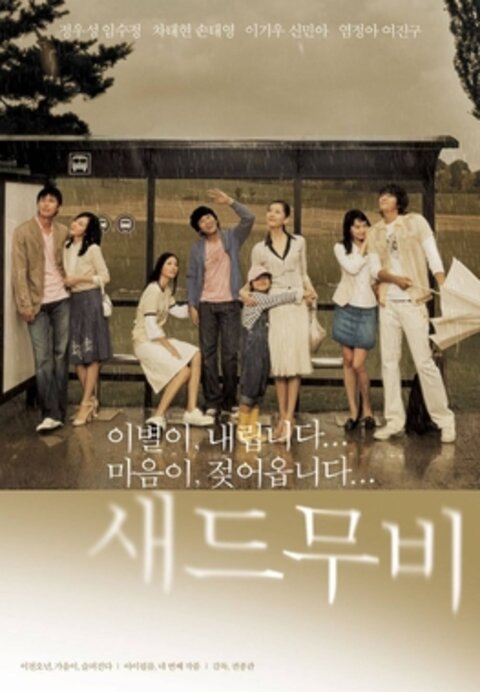
Poster shown under fair use for identification and commentary.
Sad Movie · 2005 · Romance
- Directed by:
- Jong-kwan Kwon
- Starring:
- Im Su-jeong, Shin Min-a, Cha Tae-hyun
The title uses sad in the sense causing unhappiness: a sad movie is one that makes the viewer feel bad. This 2005 South Korean romantic drama, directed by Jong-kwan Kwon, has an ensemble cast.
In Literature

Cover shown under fair use for identification and commentary.
Sad Cypress · March 1940 · Crime novel
- Author:
- Agatha Christie
This famous 1940 detective novel by Agatha Christie features Hercule Poirot. It is set partly in a courtroom, where lawyers and witnesses reveal the facts. The title comes from Shakespeare's Twelfth Night, and here sad means feeling unhappy: a cypress tree that stands for grief.
In Music

Cover shown under fair use for identification and commentary.
Sad Girl · 2014 · Baroque pop
- Artist:
- Lana Del Rey
- Album:
- Ultraviolence
In this 2014 song from the album Ultraviolence, sad means feeling unhappy. The title describes a girl who feels unhappy.
Domains
- Exam level
- CambridgeCambridgeCambridge English QualificationsThe exam suite from Cambridge University Press & Assessment, from A1 Movers up to C2 Proficiency. The benchmark names double as CEFR labels.A1 MoversIELTSIELTSInternational English Language Testing SystemThe 0–9 band test co-owned by the British Council, IDP, and Cambridge. Used for university entry, work, and migration.2.0–3.0TOEFL iBTTOEFL iBTTest of English as a Foreign Language, Internet-Based TestETS's academic English test, the standard route for US university admissions. Scored 0–120, with a 1–6 scale since 2026.1–6 scale: 1.0–1.50–23TOEICTOEICTest of English for International CommunicationETS's workplace English test, big in Japan and Korea. Listening & Reading scores 10–990 and tops out at C1.120–224
- Frequency
- Very common
- Level
- A1 · BeginnerOxford
- Updated
- アルファベット
- 読み方の一覧 →
QR code
englishreference.com/q/sad