Word
sun
US/ˈsən/
UK/sˈʌn/
Definitions
01the star
A1 · Beginner Uncountable noun Astronomy
n. the large, bright star that the Earth moves around and that gives us light and heat.
n. the star at the centre of the Solar System around which the Earth and other planets orbit.
日本語:太陽※
“The sun rose early this morning, filling the room with light.”
“Astronomers have calculated that the sun is approximately 4.6 billion years old and is currently in its stable main-sequence phase.”
Pitfall
I saw sun in the sky.
I saw the sun in the sky.
When referring to the specific star in our solar system, always use the definite article 'the'.
Synonyms
02sunlight
A2 · Elementary Uncountable noun
n. the light and heat that come from the sun.
n. the radiant energy, specifically light and heat, received from the sun.
日本語:日※
“We sat in the sun for an hour to get warm.”
“The architect designed the atrium to maximise the amount of natural sun entering the building during the winter months.”
03other stars
B2 · Upper Intermediate Countable noun Astronomy
n. any star that is the centre of its own system of planets.
n. any star, especially when considered as the central body of a planetary system.
Español:sol
“Scientists are looking for planets that travel around distant suns.”
“The discovery of exoplanets suggests that many distant suns may host planetary systems capable of supporting life.”
Synonyms
04to sit in the sun
B1 · Intermediate
v. to sit or lie in the light of the sun, usually to get warm or to tan.
v. to expose oneself or something to the direct rays of the sun.
“The cat liked to sun itself on the balcony every afternoon.”
“After the long winter, the villagers gathered in the square to sun themselves and enjoy the first signs of spring.”
Usage
Often used reflexively as 'to sun oneself'.
Synonyms
Real-World Examples
“Scientists using the world's most powerful solar telescope have captured the surface of our Sun in new, unprecedented detail.” Word family
NOUN
ADJECTIVE
Related words
Idioms
In Literature
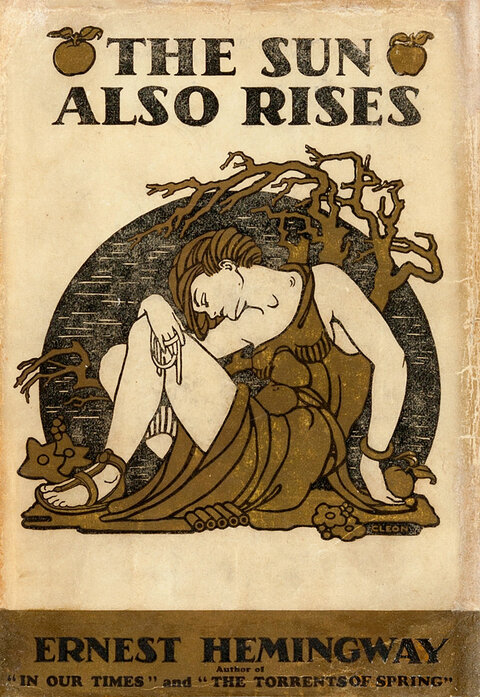
Cover: Public domain, via Wikimedia Commons — Cleo Damianakes.
The Sun Also Rises · 1926-10-22 · Modernist fiction
- Author:
- Ernest Hemingway
Ernest Hemingway's 1926 masterpiece follows a group of disillusioned expatriates traveling from Paris to Spain to witness the bullfights in Pamplona. The title refers to the eternal cycle of the natural world, suggesting that while human generations come and go, the star at the center of our solar system remains constant and indifferent to their struggles.
Domain
- Exam level
- CambridgeCambridgeCambridge English QualificationsThe exam suite from Cambridge University Press & Assessment, from A1 Movers up to C2 Proficiency. The benchmark names double as CEFR labels.A1 MoversIELTSIELTSInternational English Language Testing SystemThe 0–9 band test co-owned by the British Council, IDP, and Cambridge. Used for university entry, work, and migration.2.0–3.0TOEFL iBTTOEFL iBTTest of English as a Foreign Language, Internet-Based TestETS's academic English test, the standard route for US university admissions. Scored 0–120, with a 1–6 scale since 2026.1–6 scale: 1.0–1.50–23TOEICTOEICTest of English for International CommunicationETS's workplace English test, big in Japan and Korea. Listening & Reading scores 10–990 and tops out at C1.120–224
- Frequency
- Very common
- Level
- A1 · BeginnerOxford
- Updated
- アルファベット
- 読み方の一覧 →
QR code
englishreference.com/q/sun
※ 機械で選んだ訳語です。ネイティブスピーカーによる確認はまだです。
「日本語」 data: JMdict (EDRDG), CC BY-SA 4.0
Traducciones: Kaikki.org (Wiktionary), CC BY-SA 4.0