Word
poison
Phoneticspoi·son, stress on the first syllable
US/ˈpɔɪzən/
UK/pˈɔɪzən/
Definitions
01toxic substance
B1 · Intermediate Uncountable noun
n. a substance that causes illness or death if it enters the body.
n. a substance that, through its chemical action, usually kills, injures, or impairs an organism.
“The label on the bottle had a skull to show it contained poison.”
“The forensic report confirmed that the victim had ingested a lethal dose of a rare organic poison shortly before collapsing.”
02harmful influence
B2 · Upper Intermediate Uncountable noun
n. something that has a very bad or harmful effect on a person or situation.
n. an object, influence, or idea that is destructive or corrupting to the mind or a social environment.
“Jealousy can be a poison that destroys even the strongest friendships.”
“The spread of misinformation acted as a poison within the community, eroding trust in local institutions and creating deep social divisions.”
Synonyms
03alcoholic drink
C1 · Advanced Uncountable noun Informal · Humorous
n. a humorous way to refer to an alcoholic drink.
n. a slang reference to an alcoholic beverage, typically used when offering a choice of drinks.
“Step up to the bar and name your poison.”
“After a long week at the office, he turned to his colleague and asked, 'What's your poison tonight?'”
Teaching tip
This is almost exclusively used in the fixed phrases 'name your poison' or 'what's your poison' in social settings.
04to kill with toxins
B1 · Intermediate
v. to kill or harm a person or animal using a toxic substance.
v. to administer poison to a person or animal; to kill or injure by means of a toxin.
“The king was afraid that his enemies would try to poison his food.”
“The assassin attempted to poison the diplomat by coating the handle of the car door with a fast-acting nerve agent.”
Synonyms
05to ruin or corrupt
B2 · Upper Intermediate
v. to make a situation or someone's mind bad or hateful.
v. to corrupt or pervert the character or quality of something; to embitter a person's mind.
“Don't let his lies poison your opinion of the rest of the team.”
“The constant stream of negative propaganda served to poison the minds of the youth against their neighbours.”
06to pollute
B2 · Upper Intermediate Science
v. to make a place, like a river or the air, dirty and dangerous.
v. to contaminate an environment with harmful substances.
“Chemicals from the old factory continued to poison the local river for years.”
“Industrial runoff began to poison the groundwater, leading to a significant decline in the health of the local ecosystem.”
Synonyms
Antonyms
07to corrupt data
C1 · Advanced Computing Technical
v. to put false information into a computer system to break it.
v. to introduce malicious or false data into a cache or database to subvert a system's operations.
“The hackers tried to poison the server's cache to redirect users to a fake website.”
“DNS cache poisoning remains a significant threat, as it allows attackers to intercept traffic by providing false IP addresses to legitimate requests.”
Collocations
Common phrases and expressions where native English speakers use the word “poison” in context.
Verb
01. contain poison
“Be careful because some wild mushrooms contain poison that can be fatal.”
verb + noun
02. swallow the poison
“The detective realized the victim had accidentally swallowed the poison.”
verb + noun
Adjective
03. deadly poison
“The snake's bite delivers a deadly poison that works within minutes.”
adj + noun
04. slow-acting poison
“The spy was killed by a slow-acting poison that was difficult to detect.”
adj + noun
Noun
05. rat poison
“We had to put rat poison in the garage to deal with the pest problem.”
noun + noun
06. trace of poison
“The lab results showed a small trace of poison in the water sample.”
noun + of + noun
Preposition
07. with poison
“In the story, the queen tried to kill the princess with poison.”
prep + noun
Etymology
From Middle English poysoun, poyson, pusoun, from Old French poison, poisun, from Latin pōtiōnem (“drink, a draught, a poisonous draught, a potion”), from pōtō (“I drink”). See also potion and potable (from the same root). Mostly displaced native Old English ātor. See more at atter.
Etymology adapted from Wiktionary, available under CC BY-SA 4.0.
Word family
NOUN
ADJECTIVE
Idioms
02. poison pen
03. poisoned chalice
In Music
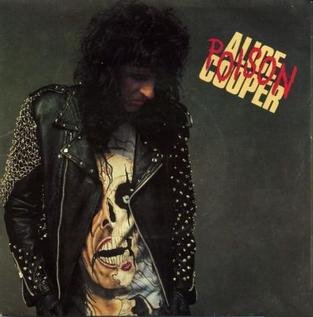
Cover shown under fair use for identification and commentary.
Poison · 1989 · Hard rock
- Artist:
- Alice Cooper
- Album:
- Trash
Alice Cooper’s 1989 hard rock hit describes a dangerous romantic attraction that feels like a toxic substance. The title uses the word figuratively to show how a person can be both addictive and harmful to one's well-being.
Domains
- Exam level
- CambridgeCambridgeCambridge English QualificationsThe exam suite from Cambridge University Press & Assessment, from A1 Movers up to C2 Proficiency. The benchmark names double as CEFR labels.B1 PreliminaryIELTSIELTSInternational English Language Testing SystemThe 0–9 band test co-owned by the British Council, IDP, and Cambridge. Used for university entry, work, and migration.4.0–5.0TOEFL iBTTOEFL iBTTest of English as a Foreign Language, Internet-Based TestETS's academic English test, the standard route for US university admissions. Scored 0–120, with a 1–6 scale since 2026.1–6 scale: 3.0–3.544–71TOEICTOEICTest of English for International CommunicationETS's workplace English test, big in Japan and Korea. Listening & Reading scores 10–990 and tops out at C1.550–784
- Frequency
- Common
- Level
- B1 · IntermediateOxford
- Updated
- アルファベット
- 読み方の一覧 →
QR code
englishreference.com/q/poison